Airplane glossary
Airplane Glossary
I am a student at Ahuntsic College. I am a 17 year old boy who wants to become an airplane pilot. To do this, I plan to go to the army to practice and study to become a pilot. Why the army? Because it will pay for my studies and I will also learn English since our country is bilingual. These are some words that I'm sure will be useful to know for my future job.
- absolute altitude
- adjective, noun
- The vertical distance between the aircraft and ground level.
- Example: Right now the absolute altitude is about 1000 meters high.
- fr: altitude absolue
- airline
- noun
- A company or organization that offers regularly scheduled flights and routes.
- Example: Increasing after 1945, air transport of people and goods by domestic and international airlines made greater and greater inroads on land and sea transport.
- fr: compagnie aérienne
.jpg)
- cabin crew
- noun, noun
- The airline staff members responsible for the safety and comfort of passengers during flight, typically the flight attendants.
- Example: My cabin crew is very nice this time, I hope I work with them again.
- fr: équipage
- cargo
- noun
- Goods carried on an aircraft.
- Example: Where are all the stuff that can't fit in the cabin? They are stock in the cargo of the plane.
- fr: cargaison
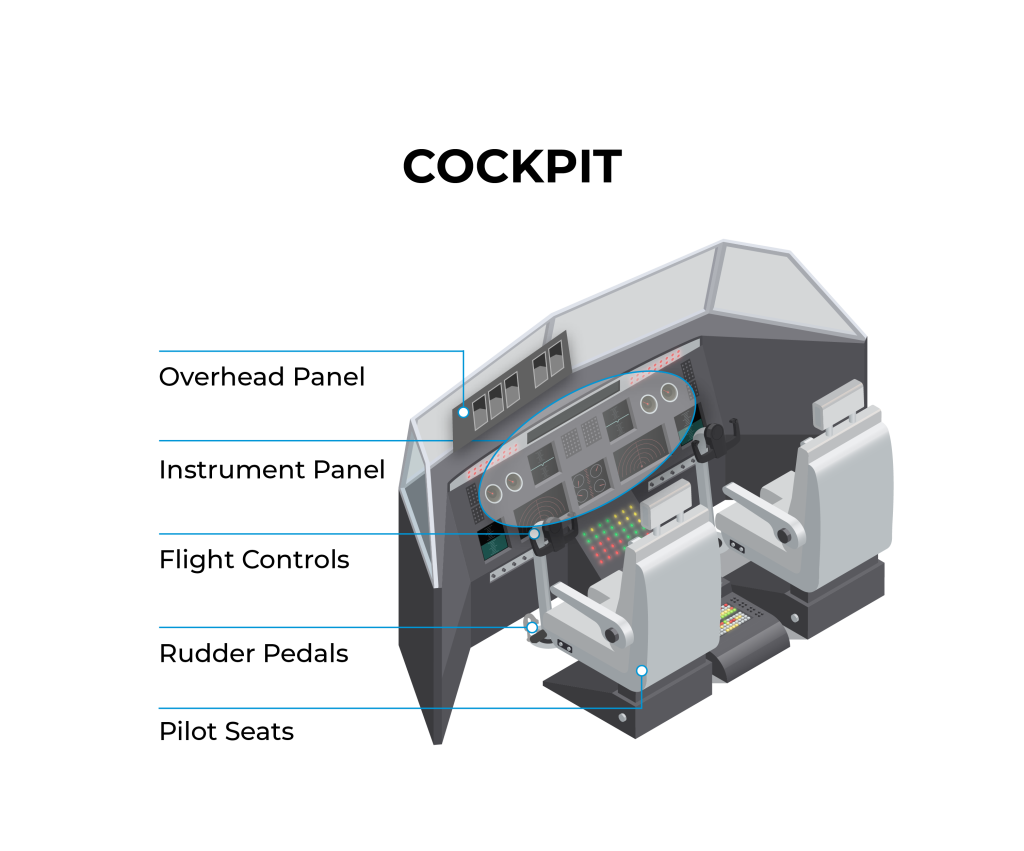
- cockpit
- noun
- The cockpit of a plane is located at the front. It contains the instrument panel and pilots seats.
- Example: Where does the pilot control the airplane? The pilot controls the airplane in the cockpit.
- fr: cockpit
- flight plan
- noun, noun
- Formatted information provided by pilots or dispatchers regarding an upcoming flight, including details such as destination, path, timing, etc.
- Example: The flight plane for today is to go from Montréal to Vancouver.
- fr: plan de vol
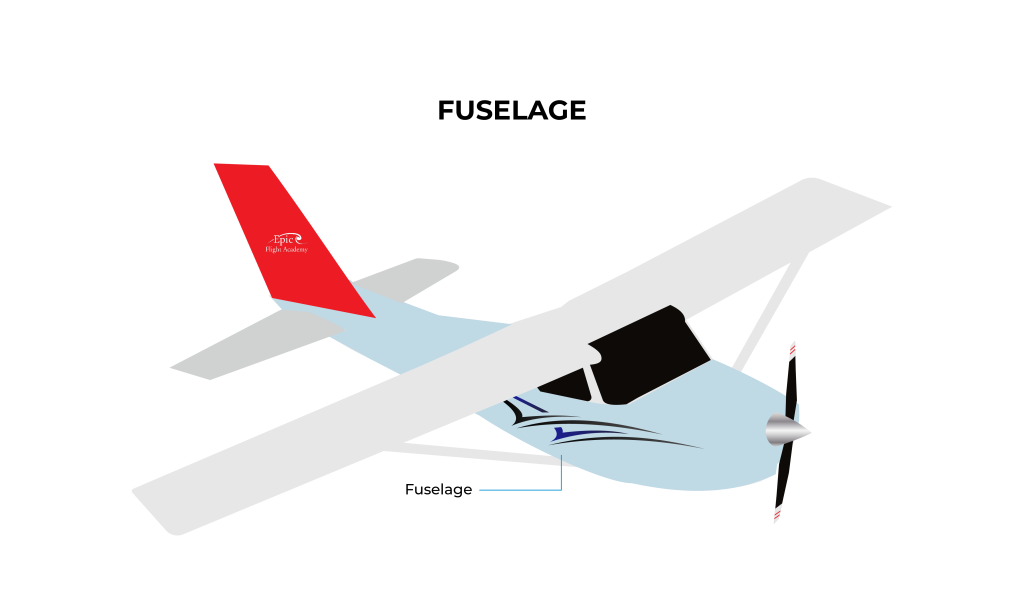
- fuselage
- noum
- The central portion of an aircraft, which is intended to house the flight crew, passengers, and cargo.
- Example: What is the central part of the plane? The central part of the plane is the fuselage.
- fr: fuselage
- gross weight
- adjective, noun
- The aircraft weight including people, cargo, fuel, etc.
- Example: There's a big difference about the gross weight when there are passengers and theirs none.
- fr: poids brut
- jet
- noun
- An aircraft propelled by one or more jet engines.
- Example: What is that small airplane over there? It's a jet.
- fr: jet
.jpg)
- knot
- noun
- A measurement of speed that takes into account nautical miles: 1 knot = 1 nautical mile per hour = 6076 feet per hour. 1 mph =1 mile per hour = 5280 feet per hour.
- Example: A plane is going about 500 knots when flying.
- fr: nœud
- lift
- noun
- The force that directly opposes aircraft weight, generated primarily by the wings.
- Example: Without the ''lift'' force a plane could not fly.
- fr: portance
- overshoot
- verb
- Landing air craft beyond the runway.
- Example: If a pilot overshoot when he is landing, he needs to practice more.
- fr: dépasser
- payload
- noun
- The weight of the content carried in an aircraft, including passengers, pilots, cargo, etc.
- Example: The payload is not high this time, so the plane is going faster.
- fr: charge
- pitch
- noun
- The movement of an aircraft, characterized by the nose and tail rising and falling.
- Example: When alone in a small airplane you can do a lot of pitch.
- fr: embardée
- quadraplane
- noun
- An aircraft that has 4 wings of the same size.
- Example: How do you call an airplane with four wings? An quadraplane.
- fr: Un avion ayant 4 ailes de la même taille.
- roll
- verb
- Aircraft rotation along the longitudinal axis, which runs from the nose to tail.
- Example: To fix his the trajectory, the pilot needs to roll.
- fr: roulement
- short field
- adjective, noun
- A runway that is shorter in length and requires aircraft to minimize the amount of runway used when taking off or landing.
- Example: The pilot needs to land on a short field.
- fr: champ court
- tail
- noun
- The rear aircraft structure that provides aerodynamic stability.
- Example: The back part of the plane is named the ''tail''.
- fr: queue
- yaw
- verb
- The movement of an aircraft, characterized by the nose moving side-to-side.
- Example: The pilot needs to yaw to correct his trajectory.
- fr: embardée
- yoke
- noun
- The aircraft control devices used by pilot for changes in attitude, as well as pitch and roll movement.
- Example: The pilot needs to use to yoke to change the altitude.
- fr: joug